


The Suez Canal: A Waterway That Changed the World
- Tahnia Miller

- Nov 18, 2025
- 2 min read
Few pieces of infrastructure have reshaped global trade and geopolitics as dramatically as the Suez Canal. Opening on the 17 November 1869, this 193-kilometre man-made waterway has served as one of the world’s busiest maritime arteries, carrying nearly 10 percent of global trade each year and saving ships up to 9 days of sailing time compared to the route around Africa.
A Shortcut Through Continents
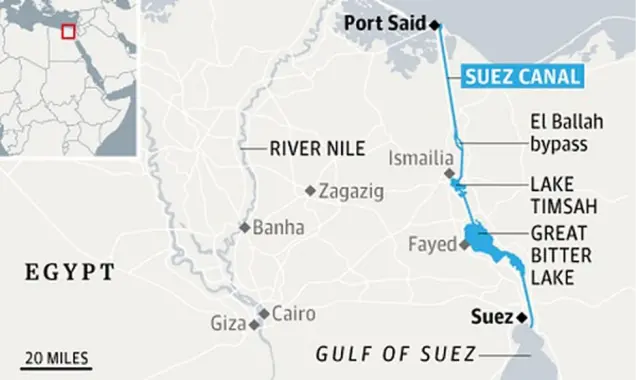
The canal links the Mediterranean Sea in the north to the Red Sea in the south.
Unlike the Panama Canal, the Suez Canal is a sea-level channel with no locks because the two seas are at the same height. This allows vessels to pass through more quickly and without the delays of lock-based systems.
Today the canal stretches 193km long, up to 24m deep, and as wide as 205m in places – a far cry from its original depth of just 8m when it first opened.
From Pharaohs to French Engineers
The idea of linking the two seas dates back almost 4,000 years to Egypt’s Pharaoh Senusret III, who built an early canal via the Nile. Napoleon Bonaparte even considered reviving the idea in the early 1800s, but it wasn’t until Ferdinand de Lesseps, a French diplomat, secured a concession in 1854 that the modern Suez Canal took shape.
Construction began: April 1859 at Port Said
Workforce: up to 30,000 labourers at any one time. Initially with forced labour and later with steam-powered dredgers
Soil removed: about 74 million m³
Completed: August 1869 when waters of the Mediterranean and Red Sea finally met
Official opening: 17 November 1869, marked by fireworks, banquets, and visiting dignitaries

Engineering Against the Elements
The canal builders faced soft Nile-delta clays in the north, shifting desert sands in the middle, rock ledges at Chalouf, and even a salt band near Bitter Lake.
Early excavation was done by pick and basket; later, enormous steam-powered dredgers cut the channel to shape.
The original canal was narrow and prone to groundings. Nearly 3,000 incidents occurred between 1870 and 1884, but continuous widening, stone-and-steel bank protection, and modern bypasses have transformed it into today’s two-way, high-capacity channel.
The Key to Global Trade
At its heart, the canal is about time and distance:
Shortens Europe–Asia route by 6,000km
Saves around nine days of sailing between Singapore and Rotterdam
Cuts fuel use and lowers CO₂ emissions by ~44% for those routes
Moves roughly 60 ships a day carrying goods worth US $3 billion daily
Because of its strategic importance, the canal has also been at the centre of international tensions, from Britain’s 19th-century objections to Egypt’s nationalisation crisis in the 1950s.
The Suez Canal Today
Following major upgrades, including an 18-mile parallel channel added in 2015, the canal can now handle vessels up to 20m draft and 77.5m beam.
In 2022, more than 22,000 ships transited the canal, proving it remains a crucial part of the global supply chain.

Why It Still Inspires
The Suez Canal’s story is one of persistence: a vision first dreamt of by ancient rulers, realised by 19th-century engineers, and continually modernised for the future. It remains a powerful reminder of how bold infrastructure can literally reshape the map – connecting continents, cultures, and commerce.


Comments